THE REPAIR THAT COMES BACK
IT'S NOT THE RIBBON — IT'S THE IC
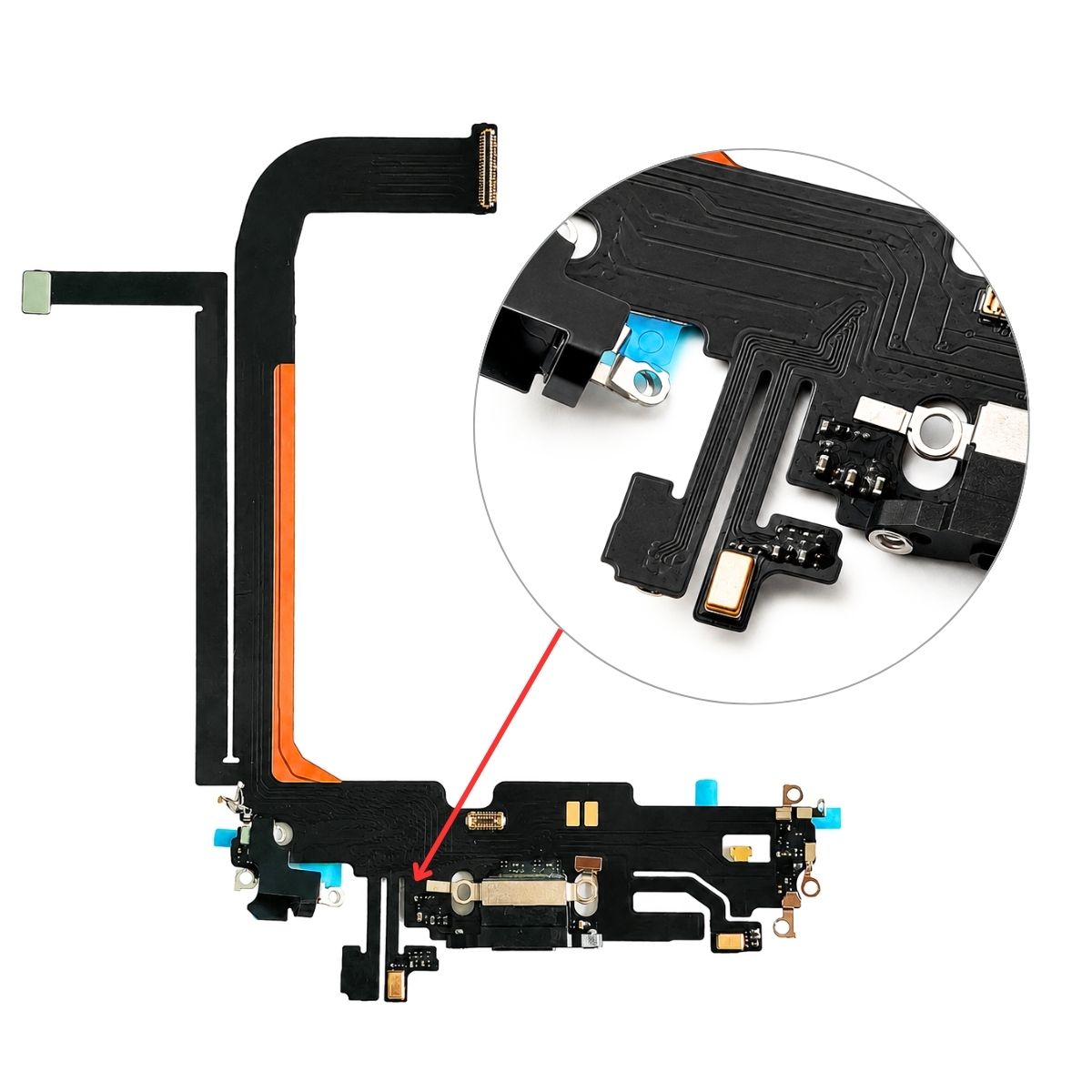
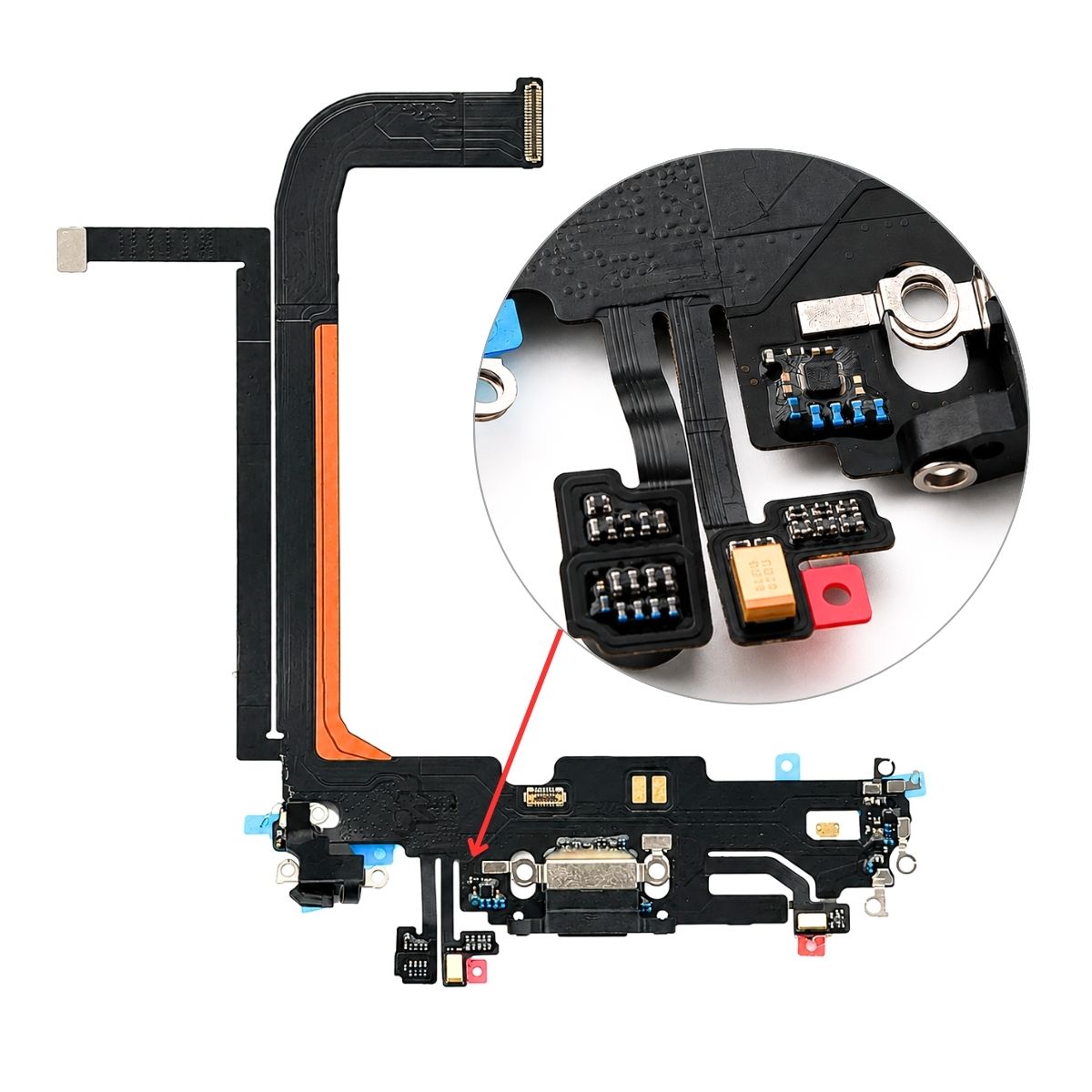
Lay two iPhone 13 Pro Max charging flexes flat and look at the cluster near the battery-terminal ring. The element-complete part has a small black IC sitting in a full field of passives, plus a complete microphone circuit. The budget part has bare traces in the same spot — the IC pad is empty and the surrounding component count is visibly thinner. Here's the part techs will check you on: that IC is NOT what makes the phone fast-charge. The chips that negotiate fast charging — Tristar/Tigris and the PD IC (on iPhone 13, the USB IC is the NXP 1616A0) — all live on the logic board, not on the flex. What the flex's IC and passives do is keep the port's signal and power path clean: the charge-handshake/CC lines, the data lines, and the mic circuit. A bad flex degrades a path that's otherwise fine — it never adds speed. That's why a missing-IC part shows up as slow charging, not as 'a bit slower than premium.'
An element-complete flex won't make a phone charge FASTER than original.
The fast-charge ICs are on the logic board, not the flex. What an element-complete part does is keep the port's signal and power path clean so charging performs as it should. A missing-IC flex is what makes a phone charge slower than it should. Anyone selling a flex on a 'built-in fast-charge IC' promise is either confused or counting on you to be — don't repeat that claim to your customers.